Confession of Linda Arden
The Confession of Linda Arden is the climactic revelation of Agatha Christie's Murder on the Orient Express, in which the character known throughout the journey as the loquacious American widow Mrs. Hubbard is unmasked as Linda Arden, the celebrated tragic actress and mother of the late Sonia Armstrong. In a soft, dreamy voice that had thrilled countless New York audiences, she admits to having conceived and directed the murder of Samuel Edward Ratchett—the kidnapper and murderer of her granddaughter, Daisy Armstrong—as an act of collective vengeance carried out by twelve people connected to the Armstrong household.
Identity and Background
Linda Arden was one of the greatest tragic actresses of her day, renowned for roles such as Lady Macbeth and Magda. Her health had declined, and she lived in retirement, lying on a sofa most of the time. She was the mother of Sonia Armstrong, whose husband, Colonel Armstrong, was a decorated war hero and the son of a Wall Street millionaire. When the Armstrongs' three-year-old daughter, Daisy, was kidnapped and murdered by Cassetti (who later assumed the alias Ratchett), the tragedy shattered the family: Sonia died in premature childbirth after the shock, Colonel Armstrong shot himself, and the nursemaid, Susanne, threw herself from a window after being wrongly suspected of complicity. Linda Arden was "just crazy with grief" in the aftermath, and she and the household servants—along with Colonel Arbuthnot, Colonel Armstrong's best friend—decided that the death sentence Cassetti had escaped must be carried out.
The Plan and Its Execution
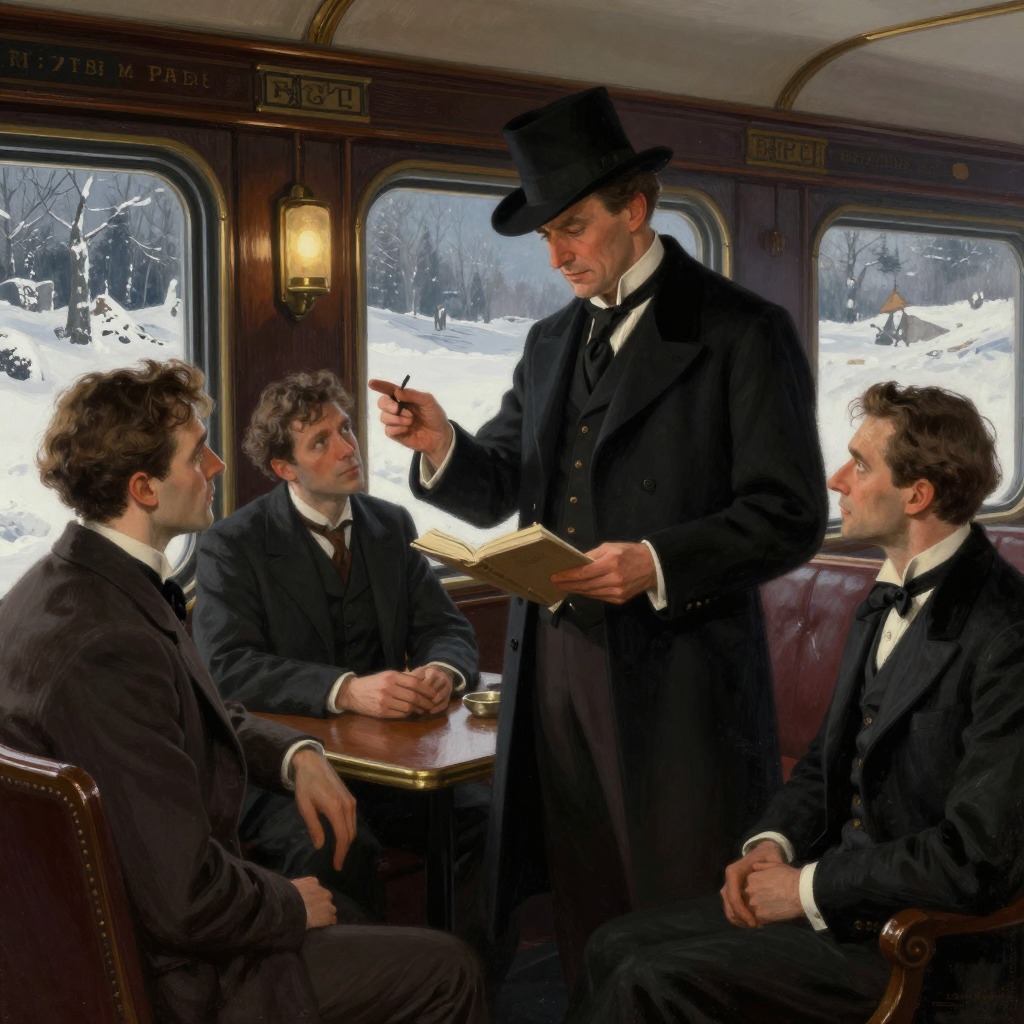
The conspiracy took shape over time. The chauffeur, Antonio Foscarelli, first suggested the method of multiple stabbers, and Mary Debenham worked out the details with Hector MacQueen, whose father had been the district attorney on the Armstrong case and who had long adored Sonia. They tracked Ratchett down through the detective Cyrus Hardman, who had been in love with Susanne. They placed MacQueen and the valet, Edward Masterman (formerly Colonel Armstrong's batman), into Ratchett's employment. Susanne's father, Pierre Michel, was a Wagon Lit conductor on the Orient Express, which gave them the opportunity to stage the murder on the train. They reserved every compartment in the Stamboul-Calais coach except one, which had been booked for a director of the company. The plan was for each of the twelve to enter Ratchett's darkened compartment through the communicating door from Mrs. Hubbard's compartment and stab him, so that no single person would know which blow killed him. The murder was designed to look like an outside job, with a false description of a "small dark man with a womanish voice" and a discarded Wagon Lit uniform to mislead the police. The snowdrift that stopped the train forced them to improvise, but they carried out the execution nonetheless.
The Confession
When Poirot presents his second solution—that all twelve passengers are guilty—Mrs. Hubbard drops her comic persona. In a voice that is "soft, rich, dreamy, quite unlike the one she had used throughout the journey," she says, "I always fancied myself in comedy parts." She acknowledges the mistake about the sponge-bag and the bolt, noting that they had rehearsed the plan on the outward journey when she was in an even-numbered compartment, where the bolt is under the handle, and she had not realized the bolts were in different positions in odd-numbered compartments. She then addresses Poirot directly: "You know all about it, M. Poirot. You're a very wonderful man. But even you can't quite imagine what it was like—that awful day in New York." She explains that the decision was made then and there, perhaps in madness, and that the twelve—or eleven, since Susanne's father was in France—agreed to carry out the sentence. She emphasizes that it was not only about Daisy: there had been other children kidnapped before, and there might be more in the future. "Society had condemned him—we were only carrying out the sentence." She offers to take sole blame, saying, "If it must all come out, can't you lay the blame upon me and me only? I would have stabbed that man twelve times willingly."
Consequences and Aftermath
Poirot turns to M. Bouc, a director of the Compagnie Internationale des Wagons Lits, and asks what he says. M. Bouc declares that Poirot's first theory—that the murder was committed by an outside assassin who left the train—is the correct one and should be offered to the Jugo-Slavian police. Dr. Constantine agrees, adding that he may have made "one or two fantastic suggestions" regarding the medical evidence. Poirot then announces that he has the honor to retire from the case. The confession thus results in a collective decision to suppress the truth, allowing the twelve conspirators to go free and the official record to reflect a false but convenient explanation.
Thematic Significance
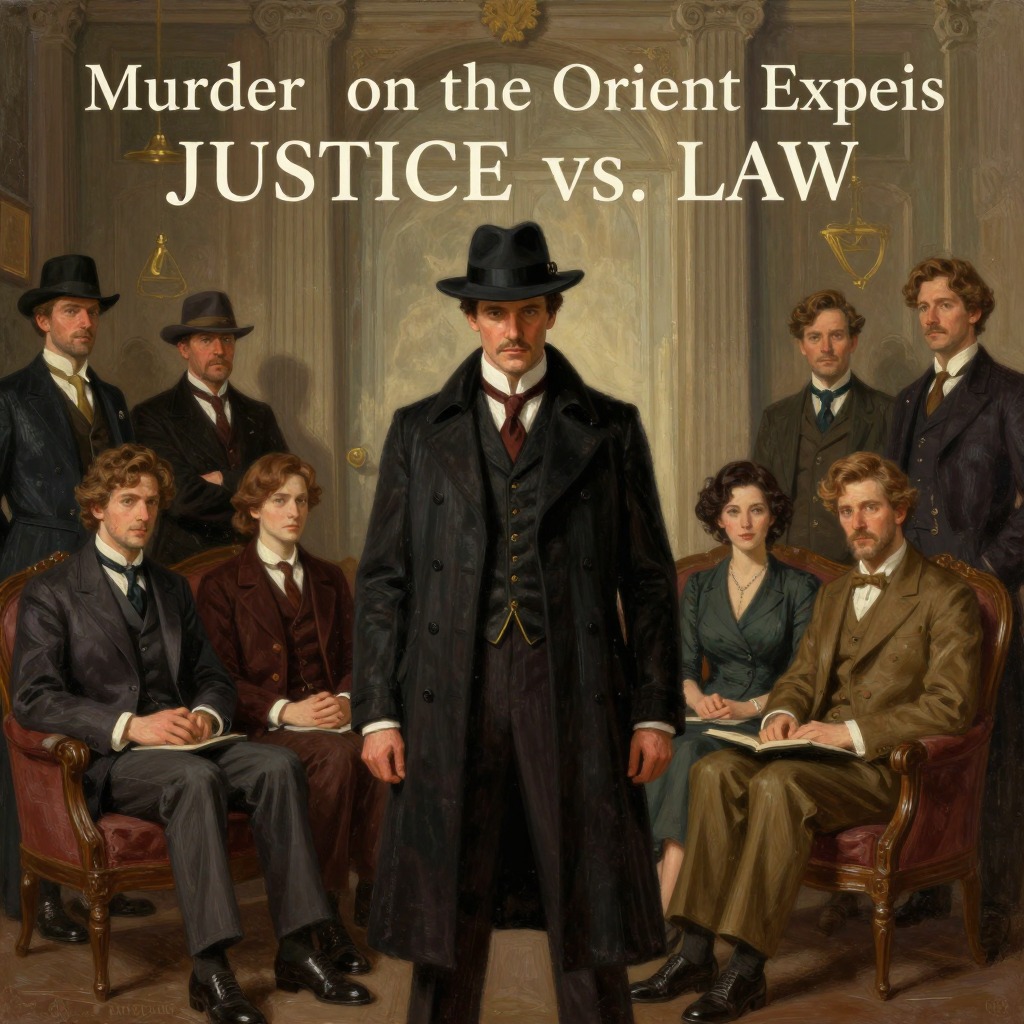
The confession crystallizes the novel's central moral conflict between legal justice and private vengeance. Linda Arden's admission transforms the murder from a simple crime into a ritualized act of retribution carried out by a self-appointed jury of twelve—a number that mirrors the legal jury system that had failed to convict Cassetti. Her willingness to accept sole responsibility underscores the depth of her grief and her conviction that the execution was justified, while the decision of the company director and the doctor to accept the false solution reflects a pragmatic compromise with justice. The scene leaves the reader to grapple with the question of whether the conspirators are murderers or executioners, and whether the law's failure can ever be legitimately remedied by private action.